
Moving to Spain with children is an exciting decision, but also full of practical questions, especially when it comes to education. The Spanish education system, the variety of schools and the process of adaptation of children can generate doubts in international families. Choosing the right school and understanding how to accompany this transition is key to a positive experience both academically and emotionally.
In this practical guide we explain how the education system works in Spain what types of schools there are, what you should take into account when choosing a school and how the BSS schools facilitate the adaptation of students arriving from other countries.
How the education system works in Spain
Before choosing a school, it is important to understand the educational stages:
- Early Childhood Education (0-6 years): Non-compulsory, very oriented to emotional and social development.
- Primary Education (6-12 years old): Compulsory stage, academic basis and acquisition of learning habits.
- Secondary Education (12-16 years): Compulsory, more academically demanding.
- Baccalaureate (16-18 years old): Non-compulsory, key for access to university.
International families usually enter the system in Primary or Secondary. At these times, accompaniment and language are especially important.
Types of schools in Spain: key differences for international families
National private schools
They follow the Spanish curriculum and often teach some subjects in English. They are a valid option for families who plan to stay for a longer period of time. long term and want a full integration into the national system.
International schools
They are the most common option for expatriate families. They offer:
- international curricula (IB, British, American),
- teaching in English or other languages,
- international academic recognition,
- multicultural student body.
For families who do not know how long they will be living in Spain or who wish to keep their options open university options outside the country this is usually the most suitable alternative.
What to consider when choosing a school if you come from abroad
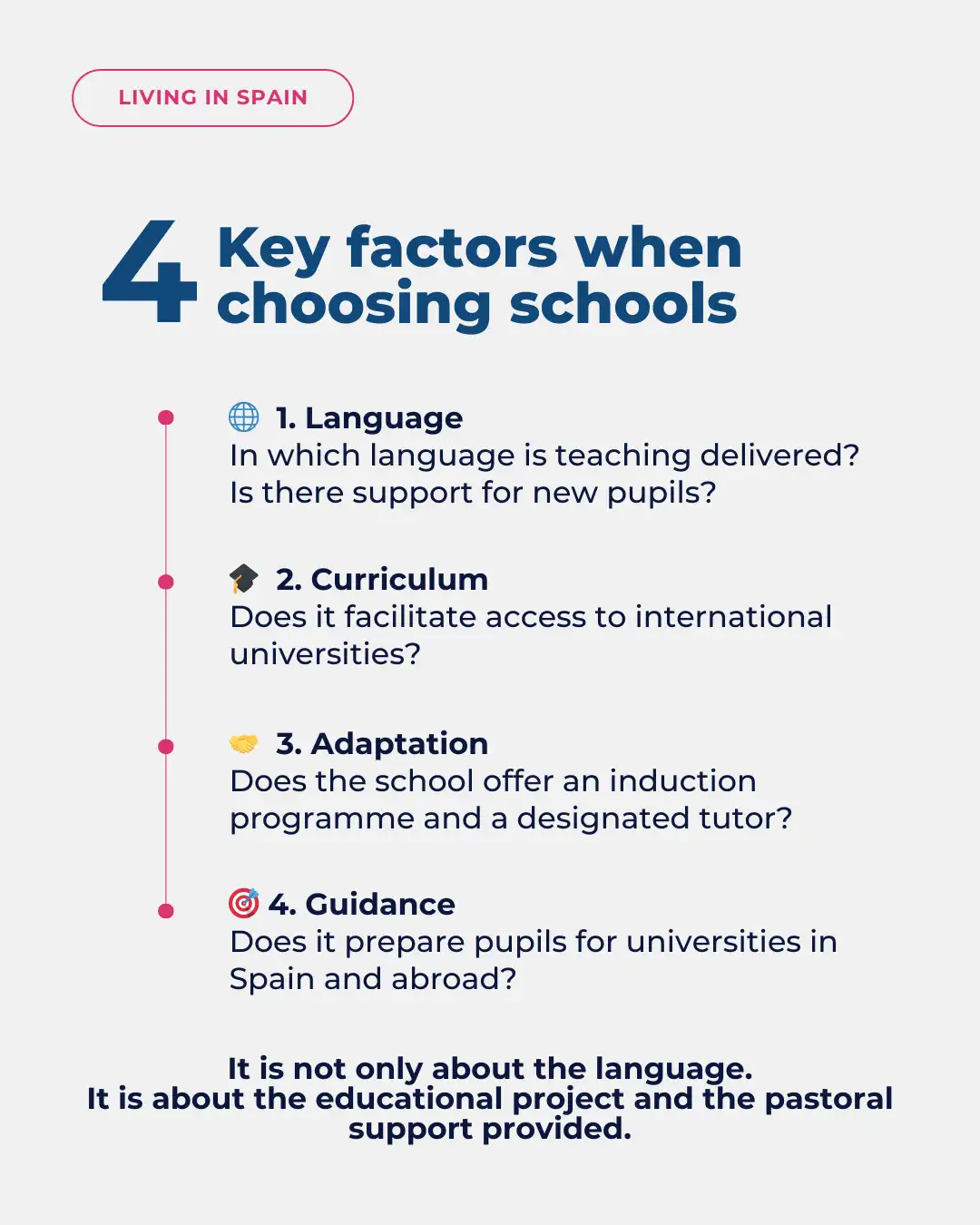
Choosing a school is not just a matter of academics. Here are the key factors to consider:
Language of instruction
It is important to assess:
- the level of English immersion,
- whether the school offers initial language support,
- how Spanish is progressively integrated.
2. Educational curriculum
The most common international curricula in Spain are:
- International Baccalaureate (IB): Ideal for international mobility and global universities.
- British curriculum: IGCSE and A-Levels, very structured.
- American curriculum flexible and oriented to personal development.
3. Accompaniment and adaptation
A good international school should offer:
- welcome plans for new students,
- reference tutors,
- emotional follow-up during the first months.
4. University Orientation
Especially relevant if your children arrive in Secondary School or Bachillerato. Orientation should include universities in Spain and abroad.
Children's adaptation process: what to expect and how to help
Moving to a new country implies a profound change for children. Adaptation usually goes through several phases:
- Initial phase of enthusiasm,
- period of insecurity or comparison,
- progressive social and academic integration.
From home, it is important:
- validate emotions,
- maintain stable routines,
- give time to the process without pressing for immediate results.
From the school, accompaniment is crucial for this transition to be smooth.
How BSS schools facilitate adaptation
The schools with the seal Best Schools in Spain (BSS) have real experience in hosting international families. Their approach is based on:
Multicultural environments
Students of different nationalities live together in the classroom, which normalizes the adaptation process and reduces the feeling of “being new”.
International educational projects
Recognized curricula, active methodologies and competency-based learning facilitate academic continuity, even if the family moves again.
Personalized attention
Individual student follow-up, constant communication with families and specific support in the first months.
Long-term orientation
BSS schools not only help to “get off to a good start,” but to plan for a student’s academic and college future.
Conclusion
Moving to Spain with children can be an enriching experience if the right school is chosen and the adaptation process is well accompanied. Understanding the educational system, assessing international options and having specialized centers make the difference.
The BSS schools offer international families a safe, multicultural and high quality educational environment, facilitating a successful academic and personal transition.
👉 Explore the best private schools by province
👉 Discover our BSS schools
👉 Contact us if you need advice

Frequently Asked Questions
What is the best choice of school if I move to Spain with children?
It depends on the length of stay and the family project. If it is an international mobility or temporary stay, international schools in Spain are usually the best option, as they offer academic continuity and globally recognized curricula.
Do my children need to know Spanish before starting school?
Not necessarily. Many international schools offer language support programs and a progressive integration of Spanish, facilitating academic and social adaptation.
Which curriculum is more advisable: IB, British or American?
The International Baccalaureate (IB), the British curriculum and the American curriculum are solid and internationally recognized options. The choice depends on the student’s profile, learning style and intended university destination.
How is the emotional adjustment of children managed?
International schools often have welcoming plans, mentor tutors and a multicultural environment that promotes social integration and the emotional well-being of the student.
Are BSS schools prepared for international families?
Yes, the Best Schools in Spain (BSS) seal identifies schools with experience in international mobility, global educational projects and personalized attention to families.
Can I change schools later if my situation changes?
Yes, international curricula facilitate academic continuity between countries, which makes it easier to change schools or educational systems if the family situation evolves.